Showing posts with label Retirement. Show all posts

Tuesday, December 18, 2012

The Most Interesting Retirement Spot You've Never Heard Of


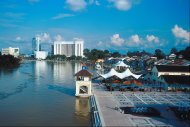
Kuching, situated just inland of the northwest coast of the island of Borneo, offers retirees with a sense of wanderlust a generous helping of laid-back charm along with a high standard of living, all for a downright bargain cost.
Kuching offers unlimited opportunities for outdoor enthusiasts. This is the land of endangered proboscis monkeys, orangutans, the world's biggest flower, and the elusive hornbill. Some of the world's largest remaining virgin rainforests can be explored in the many national parks just a short distance from the city. However, this isn't about jungle living. Kuching is a pleasant and modern city. On your less adventurous days, you could relax on pristine beaches, be pampered in a spa, play a round of golf, watch the latest Hollywood films, or enjoy a day shopping at one of the many malls and specialty shops in the city.
The name Kuching is derived from the Malay word for "cat," and feline lovers will find themselves in good company here. The city is proud of its cat statues and cat museum and seems to have a certain lazy and content feline quality about it.
In fact, Kuching may be the perfect off-the-beaten-track retirement destination. Incentives for permanent residency are even more generous here than they are in the rest of Malaysia, and the cost of living can be less than $600 a month for a home-owning couple.
But Borneo? Where in the world are we talking about? Kuching, the capital of the state of Sarawak, is situated very near the equator in the northwestern part of Malaysian Borneo, the third-largest island in the world. Sarawak is bordered on the south by the Indonesian state of West Kalimantan and on the east by the tiny oil-rich country of Brunei. The South China Sea lies directly to the north of Kuching. Sarawak, with a total population of about 2 million, is the largest in area of the 13 Malaysian states. It has 420 miles of coastline and an extremely rugged interior, much of which is still covered in primary rainforest.
Kuching itself, though, is a pretty city that presents a comfortable blend of neo-classical British colonial forts, museums, and government buildings, Chinese-style churches, shop-houses and temples, and unique Borneo-style arts and crafts. It's an eclectic mix.
One of the many things that make Malaysia in general such an appealing retirement option is its high standard of health care. Hospitals are well-equipped and modern, and most medical personnel speak fluent English. In addition, health care costs are very low, and the quality of care tends to be excellent. Since Malaysia does not have any medical schools, all physicians practicing medicine here have received their education abroad, mainly in the European Union, Australia, New Zealand, Canada, and the U.S. Health care is of such a high standard and so reasonably priced that Malaysia is one of the world's top medical tourism destinations, with visits growing at a rate of 30 percent annually.
Crime-wise, very little happens in Kuching. The risk of being a victim of a violent crime is almost nonexistent in Kuching, and acts of terrorism are extremely unlikely. According to the Global Peace Index, Malaysia is the 19th safest country in the world. (In comparison, the U.S. ranks 82nd in the same survey.)
Kuching has other attributes that make it a pleasant, comfortable, nice place to be. It is one of the cleanest cities in Malaysia and has been recognized by the United Nations, the Alliance for Healthy Cities, and the World Health Organization for this achievement. English speakers will have no problem communicating in Kuching, as English is an official language of Sarawak. Foreign home buyers enjoy special incentives with the My Second Home Program in Kuching and select other cities in the state of Sarawak, and are permitted to purchase property at a lower minimum investment than in any other state in Malaysia.
If living in a modern city in the heart of "wild" Borneo piques your imagination, you'll find that Kuching will exceed your expectations. Outdoor enthusiasts will delight in the pristine beaches, virgin jungles, and unparalleled exotic wildlife, as well as the opportunities for golf and hiking in the cool highlands. Retirees preferring city life will be heartened by plentiful shopping, museum hopping, and abundant culinary delights. Whether you prefer the cosmopolitan life or the great outdoors, you'll be immersed in the unique culture of this region, interacting with the indigenous community and gaining appreciation for the distinctive arts and traditions of a people found nowhere else in the world.
Kathleen Peddicord is the founder of the Live and Invest Overseas publishing group. With more than 25 years experience covering this beat, Kathleen reports daily on current opportunities for living, retiring, and investing overseas in her free e-letter. Her book, How To Retire Overseas--Everything You Need To Know To Live Well Abroad For Less, was recently released by Penguin Books.
Ref:  http://sg.finance.yahoo.com/news/most-interesting-retirement-spot-youve-205421378.html

Monday, June 25, 2012

10 Countries Where Retirees Live Large

Retirement in the United States is nice and all, until they ask you to actually pay for stuff.

When retirees' nest eggs are a finite and dwindling resource, rising local and federal taxes can put even the staunchest, flag-draped patriotism to the test. If retirees are willing to leave the states behind, the savings can be substantial.

[Related: De-Stressing Secrets from Around the World]

The folks at International Living crunched the numbers and looked at the price of simple staples, assimilation and staying in touch with family left behind. The following countries scored high marks not only for their inexpensive living, but for overall friendliness toward American retirees:

Panama

A retiree has it pretty sweet in Panama, where a program commonly known as pensionado help retirees settle in quickly. International Living says retirees can live like kings here for $1,500 to $2,000 a month and score apartments for less than $500 a month or buy waterfront condos for less than $200,000. Pensionado, meanwhile, gives users 15% off fast food, 15% off at hospitals and clinics, 20% off professional services used in Panama, 25% off the price of food eaten in a sit-down restaurant; 25% off domestic flights on Copa Airlines, a 30% discount on public transport and 50% off movies, theater tickets and sporting events. There's no age limit for the service, either, so help yourself.

Mexico

Considering the tensions over the state of Mexico/U.S. immigration law, it's at the very least amusing to consider American workers streaming south to chase their retirement dreams. But great homes on Mexico's Caribbean coast go for less than $170,000 while places such as Lake Chapala are home to dozens of expat communities. It's not such a bad place for snowbirds, either. It's the only retirement destination on this list withing driving distance, and retirees can rent out their properties in the off months to cover costs.

Malaysia

The country's My Second Home retirement benefits program for all foreigners is a great draw, but so is the quality Internet access, cellphone coverage and roads. It also helps that it's dirt cheap. A sea-view apartment with a pool and gym on Penang Island goes for $1,000 a month, and big-budget movies usually premiere here, are shown in English and go for about $4. Oh, and there's plenty of English being spoken as well.


Colombia

Medellin has a notorious reputation among Americans who know it mostly for its drug-laden past, but that hasn't prevented a huge expat population from springing up within city limits. Medellin's El Poblado district has Japanese, French, seafood and Italian restaurants within a block of each other. Its health care system ranks atop any other stop on this list, while the cost of everything from housing to entertainment are a great fit for a fixed income.

[Related: 3 Ways to Take Control of Your Retirement]

New Zealand

The English speaking certainly helps, but so do the winters that come during an American summer. That's some pretty costly snowbirding, so maybe the proliferation and low cost of every day amenities as well as more frivolous items should be seen as long-term investments. New Zealand's reputation for healthy living and near-absent pollution should also appeal to those who want to extend retirement as long as possible.


Nicaragua

A visit to the doctor is $15. Overall health care can cost as much as 60% less than the U.S., while U.S.-trained doctors speak English and will make house calls. A huge expat population in the colonial city of Granada spends about around $1,200 a month to live there, considering a small house can be $500 to $1,000 a month to rent. The best steak dinner in town runs about $13, while regular meals go for half that and "local meals" are $2 to $3. Local beer, meanwhile, runs between 75 cents and $1.50. This makes Florida's cost of living look like Manhattan's.

Spain

Wait, the same Spain that just dodged a bailout and is still dealing with crushing debt? Yep, that's the one, but austerity measures haven't bitten into the best of what Spain has to offer. This is by no means the cheapest option on the list and, in fact, has the most expensive real estate of any country listed. That said, it's really easy to fit in, with near-ubiquitous English, three-course meals for less than $20 and modern infrastructure that places high value on convenient, punctual rail service. Combine that with teeming culture and tons of ways to pass the time and Spain can be a great fit for retirees who've already weathered a shaky economy.

Thailand

About $500 a month is enough to score a nice new home just about anywhere in Thailand. One of International Living's contributors pays just $222 a month for a beachside bungalow with air conditioning, hot water, Wi-Fi and a refrigerator. Altogether, the cost of living in Thailand sets retirees back only about $1,000 a month while giving them great amenities and vibrant cultural and entertainment options. Bangkok still gets pretty wild, but loads of expats and lots of English speakers help ease the transition.

[Related: Best Places to Retire]

Honduras

The benefits offered to retirees beyond the three-hour flights back to see the kids are fairly substantial, especially considering that expats living on beachfront property can do well here on less than $1,500 a month. The scuba diving, fishing, sailing, kayaking, snorkeling and surfing are lovely too. But even Honduras can't top the last entry on our list:


Ecuador

This basically is Florida or Arizona for the expat community. The country's retirement benefits package includes 50% off transportation, utility bills, international round-trip flights originating in Ecuador and tickets for cultural and sporting events. Foreigners can also enroll in Ecuador's Social Security medical program for $57 a month. Those over 65 also pay lower income tax. Penthouse suites and beachfront condos go for $50,000, while beachfront rentals hover around $500 a month. A retiree's entire cost of living rounds out to roughly $800 to $1,500 a month, and the neighbors more often than not are either A) other expats or B) English-speaking locals. We'll warn that this isn't exactly undiscovered country among retirees, but it's several steps up from the costly retirement kennels and golf carts of more costly American hot spots.

Ref: http://sg.finance.yahoo.com/news/10-countries-where-retirees-live-large.html