Saturday, February 2, 2013
Thursday, January 31, 2013
World's most romantic islands
MORE FROM TRAVEL+LEISIURE
Bora-Bora seduces couples with visions of overwater bungalows above a turquoise lagoon, coralreefs, and (at the St. Regis) a romance concierge (duties have included spelling “Marry Me” in coconut husks on the beach).
The Tahitian island has certainly captured the hearts of Travel + Leisure readers, who voted Bora-Bora the No. 1 island for romance in our annual World’s Best Awards survey. Spin the globe, and you’re bound to land by one of the top romantic islands. From the Mediterranean to the Indian Ocean, they share the powerful ingredient of fantasy. There’s nothing like escaping to an island with your loved one to bring out starry eyes in the most jaded traveler.
Discover the getaway escape that’s right for you two castaways among these top islands for romance.
No. 1 Bora-Bora, French Polynesia
What could be more seductive than an overwater bungalow above a turquoise lagoon? That’s the essence of Bora Bora, a geographically blessed sliver of French Polynesia. At its heart lies the jagged peak of Mount Otemanu; on its fringes, tiny motus (islets) and a coral reef with a swirl of colorful marine life.
Room to Book: Villas 103 to 110 at the St. Regis Bora Bora Resort have private decks with whirlpools and outdoor showers. — Frances Hibbard
Known for its limestone cliffs and waterfront villas, this four-square-mile speck in the Tyrrhenian Sea fully embraces the concept of la dolce vita. (For proof, look to the afternoon crowds stretched out on the rocks and sipping Prosecco at the glamorous La Fontelina beach club.) A funicular railway whisks visitors from the main port to the boutique-lined streets of Capri town; privacy-seekers keep heading upward by foot or bus to the quieter village of Anacapri. There, stroll through the gardens of the 19th-century Villa San Michele (villasanmichele.eu) with only ivy-covered statues for company. —Shivani Vora
If there were ever a place that could get by on its looks, it would be Santorini. Whitewashed cave houses framed by bougainvillea and backed by blue-domed churches spill down the rim of an ancient volcanic crater; at sunset, the Sea of Crete is bathed in a rosy glow. Yet as compelling as the scenery may be, Santorini’s true appeal lies in its wealth of diversions—extraordinary wines, black (or red or white) beaches, and archaeological sites from the prehistoric era. —Eleni N. Gage
It’s the oldest of Hawaii’s eight main islands—and arguably the most dramatic, with scenery that ranges from wind-eroded mountains and red-walled canyons to primeval rainforest and photo-ready waterfalls. Don’t miss a six-hour hike with Chuck Blay of Kauai Nature Tours (teok.com); you’ll learn the myths of every fruit and flower along the way. —Laurel Delp
Once a backpacking haven with only the most basic accommodations, this five-mile-long island now rivals better-known Asian destinations such as Phuket and Koh Samui, Thailand. A 45-minute flight from Manila brings you to either Kalibo or Caticlan, where boats connect directly to White Beach, whose powdery sand may just be the softest in the world. —Ron Gluckman
This remote Indian Ocean archipelago greets travelers with white-sand beaches, atolls, and secluded high-end resorts that lure honeymooners and celebrities. The world’s lowest-lying nation has a close union with the sea: where else would you find a hotel with a coral nursery and an underwater nightclub? That would be Niyama Maldives, a Per Aquum Resort (peraquum.com). It has a restaurant reachable by boat only.
Peel back the tropical-paradise façade of this Hawaiian island to reveal a rich variety of landscapes: the otherworldly summit of the volcanic crater Haleakala; the sugarcane fields and farms like O’o Farm; and the 1900s cowboy town of Makawao, with horses trotting down the back roads. For the ultimate tucked-away-ness, the eastern town of Hana at the edge of a rainforest is like falling back in time—and after a day out exploring, you two can retreat to luxe Travaasa Hana Maui, a special place that emphasizes the culture and tradition of Hawaii, from the indigenous patterns used in textiles to ukulele and hula lessons.
The less-visited sister island of Bora-Bora offers an intoxicating blend of rugged jungle interior, blue lagoons, and scents of tiare, pamplemousse, and vanilla that swirl in the air. It’s believed that author James Michener’s Bali Hai in Tales of the South Pacific was inspired by the island. To get the lay of the land, drive up Magic Mountain, and you’ll see Opunohu and Cook’s bays sparkle below. The Tahitians are typically friendly and open—and can point you to the wild, coconut-strewn beach where Mutiny on the Bounty was filmed.
The secret is definitely out about Vieques, which promises the key ingredients for romance, among them, a slew of pristine coves and beaches and a languid pace. Portions of the island are designated a National Wildlife refuge—protecting sea turtles, lagoons, and mangroves—and the island’s famous bioluminescent bay is filled with microscopic organisms that flash bright blue and illuminate the water. The eco mind-set here carries through at the intimate Hix Island House, which opened its solar-powered six-room Casa Solaris in the past year, built by Canadian-born architect John Hix.
Bali’s been at the apex of the romance circuit for decades, if not centuries, with couples drawn to the mist-shrouded temples, mountainous landscapes, Balinese art, and world-famous friendliness of the locals. The island got a recent boost (as if it needed it) from the success of Eat, Pray, Love, whose film crew chose the white-sand Padang-Padang beach as backdrop. Just a short drive away from here is the new Le Méridien Bali Jimbaran, with a saltwater lagoon pool.
Tuesday, December 18, 2012
The Most Interesting Retirement Spot You've Never Heard Of
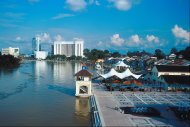
Kuching, situated just inland of the northwest coast of the island of Borneo, offers retirees with a sense of wanderlust a generous helping of laid-back charm along with a high standard of living, all for a downright bargain cost.
Kuching offers unlimited opportunities for outdoor enthusiasts. This is the land of endangered proboscis monkeys, orangutans, the world's biggest flower, and the elusive hornbill. Some of the world's largest remaining virgin rainforests can be explored in the many national parks just a short distance from the city. However, this isn't about jungle living. Kuching is a pleasant and modern city. On your less adventurous days, you could relax on pristine beaches, be pampered in a spa, play a round of golf, watch the latest Hollywood films, or enjoy a day shopping at one of the many malls and specialty shops in the city.
The name Kuching is derived from the Malay word for "cat," and feline lovers will find themselves in good company here. The city is proud of its cat statues and cat museum and seems to have a certain lazy and content feline quality about it.
In fact, Kuching may be the perfect off-the-beaten-track retirement destination. Incentives for permanent residency are even more generous here than they are in the rest of Malaysia, and the cost of living can be less than $600 a month for a home-owning couple.
But Borneo? Where in the world are we talking about? Kuching, the capital of the state of Sarawak, is situated very near the equator in the northwestern part of Malaysian Borneo, the third-largest island in the world. Sarawak is bordered on the south by the Indonesian state of West Kalimantan and on the east by the tiny oil-rich country of Brunei. The South China Sea lies directly to the north of Kuching. Sarawak, with a total population of about 2 million, is the largest in area of the 13 Malaysian states. It has 420 miles of coastline and an extremely rugged interior, much of which is still covered in primary rainforest.
Kuching itself, though, is a pretty city that presents a comfortable blend of neo-classical British colonial forts, museums, and government buildings, Chinese-style churches, shop-houses and temples, and unique Borneo-style arts and crafts. It's an eclectic mix.
One of the many things that make Malaysia in general such an appealing retirement option is its high standard of health care. Hospitals are well-equipped and modern, and most medical personnel speak fluent English. In addition, health care costs are very low, and the quality of care tends to be excellent. Since Malaysia does not have any medical schools, all physicians practicing medicine here have received their education abroad, mainly in the European Union, Australia, New Zealand, Canada, and the U.S. Health care is of such a high standard and so reasonably priced that Malaysia is one of the world's top medical tourism destinations, with visits growing at a rate of 30 percent annually.
Crime-wise, very little happens in Kuching. The risk of being a victim of a violent crime is almost nonexistent in Kuching, and acts of terrorism are extremely unlikely. According to the Global Peace Index, Malaysia is the 19th safest country in the world. (In comparison, the U.S. ranks 82nd in the same survey.)
Kuching has other attributes that make it a pleasant, comfortable, nice place to be. It is one of the cleanest cities in Malaysia and has been recognized by the United Nations, the Alliance for Healthy Cities, and the World Health Organization for this achievement. English speakers will have no problem communicating in Kuching, as English is an official language of Sarawak. Foreign home buyers enjoy special incentives with the My Second Home Program in Kuching and select other cities in the state of Sarawak, and are permitted to purchase property at a lower minimum investment than in any other state in Malaysia.
If living in a modern city in the heart of "wild" Borneo piques your imagination, you'll find that Kuching will exceed your expectations. Outdoor enthusiasts will delight in the pristine beaches, virgin jungles, and unparalleled exotic wildlife, as well as the opportunities for golf and hiking in the cool highlands. Retirees preferring city life will be heartened by plentiful shopping, museum hopping, and abundant culinary delights. Whether you prefer the cosmopolitan life or the great outdoors, you'll be immersed in the unique culture of this region, interacting with the indigenous community and gaining appreciation for the distinctive arts and traditions of a people found nowhere else in the world.
Kathleen Peddicord is the founder of the Live and Invest Overseas publishing group. With more than 25 years experience covering this beat, Kathleen reports daily on current opportunities for living, retiring, and investing overseas in her free e-letter. Her book, How To Retire Overseas--Everything You Need To Know To Live Well Abroad For Less, was recently released by Penguin Books.
Ref: http://sg.finance.yahoo.com/news/most-interesting-retirement-spot-youve-205421378.html
Sunday, August 12, 2012
How to Make Money While On Vacation
Vacations are inherently unproductive. In fact, the whole point of a vacation is to be spectacularly unproductive
for a given time. But lucky for us, productivity and money aren’t
always related! Hey, if they were, F1 drivers would be digging for week
old nuggets in a McDonald’s dumpster. To further illustrate the point,
let’s look at how an unproductive vacation can net you some cash. Take note if, like me, the only thing you’ll value during Chinese New Year will be your absence:
There’s always someone with spare furniture, unsold MLM products, or books that can’t break into our semi-literate society. These people need some kind of storage, and warehousing is expensive. So if you’re going away for a long stretch (a month or more), ask around; I bet you’ll find quite a few friends or relatives who will rent your space.
Charge a low amount, like $40 a month. For whatever reason, Singapore is filled with people who need storage space for unused hi-fi sets, old electronics, and boxes of LPs.
Whenever I went abroad, I’d take a ton of photos and notes. It’s not as if I wouldn’t want it as a remembrance anyway; personal notes and pictures are worth more than some book-store travel guide (Which, uh, I am now advising you to sell those notes and pictures to. Awkward.)
Anyway, you can sell your articles, to an international or local publication. I used to net about $200 an article; not bad for quick trips to places like Bali. If you’re not one to write, try selling your pictures; exotic locales make for great stock photography.
As a last resort, put them in the Creative Commons on Flickr. You won’t make any money, but I’ll steal them, change their context, and caption them into infamous fart jokes.
The wonder of sites like E-Bay is that you can be mostly absent. It will continue to collect bids, and you get to set the timer. So round up your stuff, and set your auctions to end when you get home. When you get back, just send off the goods and collect your cash.
If you run a side-business selling products, use the scheduling on your blog to keep things rolling. Write some extra articles, and schedule them to keep publishing when you’re away. Same with e-mails; use Boomerang to stay in touch with customers. They won’t even notice you’re gone.
You can ask that question when you go on holiday, except add a price tag to it. Charge a little bit to buy things back from overseas.
Don’t do it to close friends and relatives; ostracism is bad for your ego. But your colleagues or passing acquaintances won’t mind. Key amongst them: amateur cooks or people who sell New Year pastries. They always need some kind of bizarre ingredient in suspicious quantities; just make sure what they pay you will cover the extra luggage costs.
When I do this, I’m sure to bring along an empty bag or two. Also, check that what they’re asking for will clear customs.
“Guys, I’m raising money to pay for my trip.”
There are two rules to observe here. The first is to never bring anything you haven’t inspected; because you don’t want customs opening your delivery and finding a taxidermy job of the world’s last exotic striped cuckoo or something. And I don’t want to suggest any of your friends might be drug smugglers, but you know what? THEY MIGHT BE. You never know. So inspect everything.
Second, never deliver money. The last time I did, I spent it before I even got to the departure gate. Those chocolate liquers are good. Oh, and also, you might lose it and stuff.
Now go and have fun, and come back richer. And as a personal finance expert, I don’t come cheap: I expect a souvenir key chain for this.
Update me when you get one, or just follow us on Facebook for more travel articles in future.
“My job’s a real beach.”
1. Rent Your Home Space
No, not for people to hold parties or whatever. Unless you’re really brave, and your current property value is lower than SMRT’s approval ratings. What I mean by “rent your space” is to provide storage.There’s always someone with spare furniture, unsold MLM products, or books that can’t break into our semi-literate society. These people need some kind of storage, and warehousing is expensive. So if you’re going away for a long stretch (a month or more), ask around; I bet you’ll find quite a few friends or relatives who will rent your space.
Charge a low amount, like $40 a month. For whatever reason, Singapore is filled with people who need storage space for unused hi-fi sets, old electronics, and boxes of LPs.
Yes, that’s my, uh, private storeroom. $50 a week, okay?
2. Sell Your Travel Experience
I wasn’t always fat, happy, and well-financed. No, I used to be healthy, like poor people who have to move around and do actual work. But back in those days, I could only afford vacations by selling travel articles.Whenever I went abroad, I’d take a ton of photos and notes. It’s not as if I wouldn’t want it as a remembrance anyway; personal notes and pictures are worth more than some book-store travel guide (Which, uh, I am now advising you to sell those notes and pictures to. Awkward.)
Anyway, you can sell your articles, to an international or local publication. I used to net about $200 an article; not bad for quick trips to places like Bali. If you’re not one to write, try selling your pictures; exotic locales make for great stock photography.
As a last resort, put them in the Creative Commons on Flickr. You won’t make any money, but I’ll steal them, change their context, and caption them into infamous fart jokes.
“Just 52 more pics okay? Come on, smile!”
3. Use E-Bay or a Blog
Before heading off, gather up and E-Bay everything you don’t need. Your account can remain active even when you’re not, and you might come home to a nice profit.The wonder of sites like E-Bay is that you can be mostly absent. It will continue to collect bids, and you get to set the timer. So round up your stuff, and set your auctions to end when you get home. When you get back, just send off the goods and collect your cash.
If you run a side-business selling products, use the scheduling on your blog to keep things rolling. Write some extra articles, and schedule them to keep publishing when you’re away. Same with e-mails; use Boomerang to stay in touch with customers. They won’t even notice you’re gone.
MoneySmart Editor: Pays extra for better view. Uses laptop for entire trip.
4. Buy Back Service
People like to ask “You want anything from (where I’m headed)?”You can ask that question when you go on holiday, except add a price tag to it. Charge a little bit to buy things back from overseas.
Don’t do it to close friends and relatives; ostracism is bad for your ego. But your colleagues or passing acquaintances won’t mind. Key amongst them: amateur cooks or people who sell New Year pastries. They always need some kind of bizarre ingredient in suspicious quantities; just make sure what they pay you will cover the extra luggage costs.
When I do this, I’m sure to bring along an empty bag or two. Also, check that what they’re asking for will clear customs.
“I lost my luggage. Oh, and also my son, but let’s find the luggage.”
5. Courier Service
Ask your acquaintances if anyone wants letters or goods delivered. This is the inverse of point 4; you bring stuff over there instead of bringing it back. Some people may complain about you charging, so say this straight up:“Guys, I’m raising money to pay for my trip.”
There are two rules to observe here. The first is to never bring anything you haven’t inspected; because you don’t want customs opening your delivery and finding a taxidermy job of the world’s last exotic striped cuckoo or something. And I don’t want to suggest any of your friends might be drug smugglers, but you know what? THEY MIGHT BE. You never know. So inspect everything.
Second, never deliver money. The last time I did, I spent it before I even got to the departure gate. Those chocolate liquers are good. Oh, and also, you might lose it and stuff.
Now go and have fun, and come back richer. And as a personal finance expert, I don’t come cheap: I expect a souvenir key chain for this.
Update me when you get one, or just follow us on Facebook for more travel articles in future.
I’m not smuggling endangered animals! Those are all COMMON animals.
Ref: http://sg.finance.yahoo.com/news/money-while-vacation-160000581.html
Thursday, July 26, 2012
The Ideal Retirement Haven You've Never Heard Of
Few places in the world meet all the criteria of an ideal retirement haven.
Here's one place that does that most of the world has never heard of:
Hua Hin, Thailand. Dollar for dollar, you likely could enjoy a much
higher standard of living in Hua Hin than back home, no matter where
back home happens to be.
Hua Hin offers miles of clean beaches, good year-round weather, and a large foreign community. In Hua Hin, you're close to the cultural offerings of Bangkok, but removed from the chaos of the capital. And because Hua Hin is a small city, it does not suffer from the population pressures found in Thailand's larger urban areas. There are nine golf courses in and around Hua Hin with more under construction. Mountains, caves, waterfalls, and abundant wildlife can be enjoyed at the seven national parks within a two-hour drive.
A new internationally accredited hospital opened recently, further supporting the city's top-notch medical care facilities and growing reputation as a medical tourism destination. Medical procedures performed in Thailand cost anywhere from 20 percent to 80 percent less than the same procedures performed in the U.S., while the equipment used and the care received are as good or better than that available in the West.
Housing is plentiful, with condominiums and private homes stretched out near and along the beach. Secure and modern gated subdivisions are also numerous, especially around the golf courses and in the hills on the edges of town.
Nearly 20 percent of the 84,883 permanent residents of Hua Hin have immigrated from abroad with the specific intention of making a new life here. They are involved in the larger community, attend meetings with the city council, and have a real influence on the future of the city. They've brought a lot of their former lives with them, including reading clubs, festivals, cycling clubs, soccer leagues, wine-tasting, and darts tournaments. There is something happening almost every day.
New arrivals to Hua Hin appreciate the cleanliness of the area, the widespread use of English, the lack of corruption, and the low-cost, high standard of living, all of which make this a very attractive destination for retirees on a moderate budget. A couple could live a fully-appointed, rich, and interesting life here on a budget of as little as $1,100 per month.
In many respects, Hua Hin could be described as the San Miguel de Allende or Boquete of Southeast Asia. Those destinations, in Mexico and Panama respectively, are home to big and growing expat retiree communities. Like them, Hua Hin is home to enough local Thai people to keep things interesting. You'll know that you're in a foreign country. But, as with launching a new life in San Miguel or Boquete, moving to Hua Hin does not require total immersion in a new culture. There are enough expats and activities to ease the transition.
Perhaps the best part about retirement in Hua Hin is that you are not obliged to give up comforts and conveniences from back home. You'll be able to live better and enhance your quality of life, because the infrastructure and services to do so are both available and affordable.
The abundance of restaurants is impressive and eating out is one activity that almost all expats enjoy on a regular basis. A deliciously relaxing Thai massage is another affordable indulgence, and practitioners are located downtown and along the length of Petchkasem Road. A two-hour traditional massage costs 300 to 600 baht--that's just $10 to $20. An experienced full-time housekeeper charges around 7,500 baht ($225) per month.
Hua Hin has one of the most welcoming climates in Thailand. The average year-round temperature is a balmy 83 degrees Fahrenheit, with average highs of 88 degrees and lows of 77. The town is located in one of the driest parts of Thailand, with an average annual rainfall of just 37 inches.
Rents are almost always negotiable, at least to an extent. Your biggest decision here will be whether you want to live on the beach or more inland. The beach is lined with condominiums and apartments, many with direct ocean views. A furnished two-bedroom place with an ocean view rents for $800 to $1,000 per month. However, back from the beach, rents are half as much.
Kathleen Peddicord is the founder of the Live and Invest Overseas publishing group. With more than 25 years experience covering this beat, Kathleen reports daily on current opportunities for living, retiring, and investing overseas in her free e-letter. Her book, How To Retire Overseas--Everything You Need To Know To Live Well Abroad For Less, was recently released by Penguin Books.
Ref: http://sg.finance.yahoo.com/news/ideal-retirement-haven-youve-never-162657501.html
Hua Hin offers miles of clean beaches, good year-round weather, and a large foreign community. In Hua Hin, you're close to the cultural offerings of Bangkok, but removed from the chaos of the capital. And because Hua Hin is a small city, it does not suffer from the population pressures found in Thailand's larger urban areas. There are nine golf courses in and around Hua Hin with more under construction. Mountains, caves, waterfalls, and abundant wildlife can be enjoyed at the seven national parks within a two-hour drive.
A new internationally accredited hospital opened recently, further supporting the city's top-notch medical care facilities and growing reputation as a medical tourism destination. Medical procedures performed in Thailand cost anywhere from 20 percent to 80 percent less than the same procedures performed in the U.S., while the equipment used and the care received are as good or better than that available in the West.
Housing is plentiful, with condominiums and private homes stretched out near and along the beach. Secure and modern gated subdivisions are also numerous, especially around the golf courses and in the hills on the edges of town.
Nearly 20 percent of the 84,883 permanent residents of Hua Hin have immigrated from abroad with the specific intention of making a new life here. They are involved in the larger community, attend meetings with the city council, and have a real influence on the future of the city. They've brought a lot of their former lives with them, including reading clubs, festivals, cycling clubs, soccer leagues, wine-tasting, and darts tournaments. There is something happening almost every day.
New arrivals to Hua Hin appreciate the cleanliness of the area, the widespread use of English, the lack of corruption, and the low-cost, high standard of living, all of which make this a very attractive destination for retirees on a moderate budget. A couple could live a fully-appointed, rich, and interesting life here on a budget of as little as $1,100 per month.
In many respects, Hua Hin could be described as the San Miguel de Allende or Boquete of Southeast Asia. Those destinations, in Mexico and Panama respectively, are home to big and growing expat retiree communities. Like them, Hua Hin is home to enough local Thai people to keep things interesting. You'll know that you're in a foreign country. But, as with launching a new life in San Miguel or Boquete, moving to Hua Hin does not require total immersion in a new culture. There are enough expats and activities to ease the transition.
Perhaps the best part about retirement in Hua Hin is that you are not obliged to give up comforts and conveniences from back home. You'll be able to live better and enhance your quality of life, because the infrastructure and services to do so are both available and affordable.
The abundance of restaurants is impressive and eating out is one activity that almost all expats enjoy on a regular basis. A deliciously relaxing Thai massage is another affordable indulgence, and practitioners are located downtown and along the length of Petchkasem Road. A two-hour traditional massage costs 300 to 600 baht--that's just $10 to $20. An experienced full-time housekeeper charges around 7,500 baht ($225) per month.
Hua Hin has one of the most welcoming climates in Thailand. The average year-round temperature is a balmy 83 degrees Fahrenheit, with average highs of 88 degrees and lows of 77. The town is located in one of the driest parts of Thailand, with an average annual rainfall of just 37 inches.
Rents are almost always negotiable, at least to an extent. Your biggest decision here will be whether you want to live on the beach or more inland. The beach is lined with condominiums and apartments, many with direct ocean views. A furnished two-bedroom place with an ocean view rents for $800 to $1,000 per month. However, back from the beach, rents are half as much.
Kathleen Peddicord is the founder of the Live and Invest Overseas publishing group. With more than 25 years experience covering this beat, Kathleen reports daily on current opportunities for living, retiring, and investing overseas in her free e-letter. Her book, How To Retire Overseas--Everything You Need To Know To Live Well Abroad For Less, was recently released by Penguin Books.
Ref: http://sg.finance.yahoo.com/news/ideal-retirement-haven-youve-never-162657501.html
Monday, June 25, 2012
10 Countries Where Retirees Live Large
Retirement in the United States is nice and all, until they ask you to actually pay for stuff.
When retirees' nest eggs are a finite and dwindling resource, rising local and federal taxes can put even the staunchest, flag-draped patriotism to the test. If retirees are willing to leave the states behind, the savings can be substantial.
[Related: De-Stressing Secrets from Around the World]
The folks at International Living crunched the numbers and looked at the price of simple staples, assimilation and staying in touch with family left behind. The following countries scored high marks not only for their inexpensive living, but for overall friendliness toward American retirees:
Panama
A retiree has it pretty sweet in Panama, where a program commonly known as pensionado help retirees settle in quickly. International Living says retirees can live like kings here for $1,500 to $2,000 a month and score apartments for less than $500 a month or buy waterfront condos for less than $200,000. Pensionado, meanwhile, gives users 15% off fast food, 15% off at hospitals and clinics, 20% off professional services used in Panama, 25% off the price of food eaten in a sit-down restaurant; 25% off domestic flights on Copa Airlines, a 30% discount on public transport and 50% off movies, theater tickets and sporting events. There's no age limit for the service, either, so help yourself.
Mexico
Considering the tensions over the state of Mexico/U.S. immigration law, it's at the very least amusing to consider American workers streaming south to chase their retirement dreams. But great homes on Mexico's Caribbean coast go for less than $170,000 while places such as Lake Chapala are home to dozens of expat communities. It's not such a bad place for snowbirds, either. It's the only retirement destination on this list withing driving distance, and retirees can rent out their properties in the off months to cover costs.
Malaysia
The country's My Second Home retirement benefits program for all foreigners is a great draw, but so is the quality Internet access, cellphone coverage and roads. It also helps that it's dirt cheap. A sea-view apartment with a pool and gym on Penang Island goes for $1,000 a month, and big-budget movies usually premiere here, are shown in English and go for about $4. Oh, and there's plenty of English being spoken as well.
Colombia
Medellin has a notorious reputation among Americans who know it mostly for its drug-laden past, but that hasn't prevented a huge expat population from springing up within city limits. Medellin's El Poblado district has Japanese, French, seafood and Italian restaurants within a block of each other. Its health care system ranks atop any other stop on this list, while the cost of everything from housing to entertainment are a great fit for a fixed income.
[Related: 3 Ways to Take Control of Your Retirement]
New Zealand
The English speaking certainly helps, but so do the winters that come during an American summer. That's some pretty costly snowbirding, so maybe the proliferation and low cost of every day amenities as well as more frivolous items should be seen as long-term investments. New Zealand's reputation for healthy living and near-absent pollution should also appeal to those who want to extend retirement as long as possible.
Nicaragua
A visit to the doctor is $15. Overall health care can cost as much as 60% less than the U.S., while U.S.-trained doctors speak English and will make house calls. A huge expat population in the colonial city of Granada spends about around $1,200 a month to live there, considering a small house can be $500 to $1,000 a month to rent. The best steak dinner in town runs about $13, while regular meals go for half that and "local meals" are $2 to $3. Local beer, meanwhile, runs between 75 cents and $1.50. This makes Florida's cost of living look like Manhattan's.
Spain
Wait, the same Spain that just dodged a bailout and is still dealing with crushing debt? Yep, that's the one, but austerity measures haven't bitten into the best of what Spain has to offer. This is by no means the cheapest option on the list and, in fact, has the most expensive real estate of any country listed. That said, it's really easy to fit in, with near-ubiquitous English, three-course meals for less than $20 and modern infrastructure that places high value on convenient, punctual rail service. Combine that with teeming culture and tons of ways to pass the time and Spain can be a great fit for retirees who've already weathered a shaky economy.
Thailand
About $500 a month is enough to score a nice new home just about anywhere in Thailand. One of International Living's contributors pays just $222 a month for a beachside bungalow with air conditioning, hot water, Wi-Fi and a refrigerator. Altogether, the cost of living in Thailand sets retirees back only about $1,000 a month while giving them great amenities and vibrant cultural and entertainment options. Bangkok still gets pretty wild, but loads of expats and lots of English speakers help ease the transition.
[Related: Best Places to Retire]
Honduras
The benefits offered to retirees beyond the three-hour flights back to see the kids are fairly substantial, especially considering that expats living on beachfront property can do well here on less than $1,500 a month. The scuba diving, fishing, sailing, kayaking, snorkeling and surfing are lovely too. But even Honduras can't top the last entry on our list:
Ecuador
This basically is Florida or Arizona for the expat community. The country's retirement benefits package includes 50% off transportation, utility bills, international round-trip flights originating in Ecuador and tickets for cultural and sporting events. Foreigners can also enroll in Ecuador's Social Security medical program for $57 a month. Those over 65 also pay lower income tax. Penthouse suites and beachfront condos go for $50,000, while beachfront rentals hover around $500 a month. A retiree's entire cost of living rounds out to roughly $800 to $1,500 a month, and the neighbors more often than not are either A) other expats or B) English-speaking locals. We'll warn that this isn't exactly undiscovered country among retirees, but it's several steps up from the costly retirement kennels and golf carts of more costly American hot spots.
Ref: http://sg.finance.yahoo.com/news/10-countries-where-retirees-live-large.html
When retirees' nest eggs are a finite and dwindling resource, rising local and federal taxes can put even the staunchest, flag-draped patriotism to the test. If retirees are willing to leave the states behind, the savings can be substantial.
[Related: De-Stressing Secrets from Around the World]
The folks at International Living crunched the numbers and looked at the price of simple staples, assimilation and staying in touch with family left behind. The following countries scored high marks not only for their inexpensive living, but for overall friendliness toward American retirees:
A retiree has it pretty sweet in Panama, where a program commonly known as pensionado help retirees settle in quickly. International Living says retirees can live like kings here for $1,500 to $2,000 a month and score apartments for less than $500 a month or buy waterfront condos for less than $200,000. Pensionado, meanwhile, gives users 15% off fast food, 15% off at hospitals and clinics, 20% off professional services used in Panama, 25% off the price of food eaten in a sit-down restaurant; 25% off domestic flights on Copa Airlines, a 30% discount on public transport and 50% off movies, theater tickets and sporting events. There's no age limit for the service, either, so help yourself.
Mexico
Considering the tensions over the state of Mexico/U.S. immigration law, it's at the very least amusing to consider American workers streaming south to chase their retirement dreams. But great homes on Mexico's Caribbean coast go for less than $170,000 while places such as Lake Chapala are home to dozens of expat communities. It's not such a bad place for snowbirds, either. It's the only retirement destination on this list withing driving distance, and retirees can rent out their properties in the off months to cover costs.
The country's My Second Home retirement benefits program for all foreigners is a great draw, but so is the quality Internet access, cellphone coverage and roads. It also helps that it's dirt cheap. A sea-view apartment with a pool and gym on Penang Island goes for $1,000 a month, and big-budget movies usually premiere here, are shown in English and go for about $4. Oh, and there's plenty of English being spoken as well.
Colombia
Medellin has a notorious reputation among Americans who know it mostly for its drug-laden past, but that hasn't prevented a huge expat population from springing up within city limits. Medellin's El Poblado district has Japanese, French, seafood and Italian restaurants within a block of each other. Its health care system ranks atop any other stop on this list, while the cost of everything from housing to entertainment are a great fit for a fixed income.
[Related: 3 Ways to Take Control of Your Retirement]
The English speaking certainly helps, but so do the winters that come during an American summer. That's some pretty costly snowbirding, so maybe the proliferation and low cost of every day amenities as well as more frivolous items should be seen as long-term investments. New Zealand's reputation for healthy living and near-absent pollution should also appeal to those who want to extend retirement as long as possible.
Nicaragua
A visit to the doctor is $15. Overall health care can cost as much as 60% less than the U.S., while U.S.-trained doctors speak English and will make house calls. A huge expat population in the colonial city of Granada spends about around $1,200 a month to live there, considering a small house can be $500 to $1,000 a month to rent. The best steak dinner in town runs about $13, while regular meals go for half that and "local meals" are $2 to $3. Local beer, meanwhile, runs between 75 cents and $1.50. This makes Florida's cost of living look like Manhattan's.
Wait, the same Spain that just dodged a bailout and is still dealing with crushing debt? Yep, that's the one, but austerity measures haven't bitten into the best of what Spain has to offer. This is by no means the cheapest option on the list and, in fact, has the most expensive real estate of any country listed. That said, it's really easy to fit in, with near-ubiquitous English, three-course meals for less than $20 and modern infrastructure that places high value on convenient, punctual rail service. Combine that with teeming culture and tons of ways to pass the time and Spain can be a great fit for retirees who've already weathered a shaky economy.
Thailand
About $500 a month is enough to score a nice new home just about anywhere in Thailand. One of International Living's contributors pays just $222 a month for a beachside bungalow with air conditioning, hot water, Wi-Fi and a refrigerator. Altogether, the cost of living in Thailand sets retirees back only about $1,000 a month while giving them great amenities and vibrant cultural and entertainment options. Bangkok still gets pretty wild, but loads of expats and lots of English speakers help ease the transition.
[Related: Best Places to Retire]
The benefits offered to retirees beyond the three-hour flights back to see the kids are fairly substantial, especially considering that expats living on beachfront property can do well here on less than $1,500 a month. The scuba diving, fishing, sailing, kayaking, snorkeling and surfing are lovely too. But even Honduras can't top the last entry on our list:
Ecuador
This basically is Florida or Arizona for the expat community. The country's retirement benefits package includes 50% off transportation, utility bills, international round-trip flights originating in Ecuador and tickets for cultural and sporting events. Foreigners can also enroll in Ecuador's Social Security medical program for $57 a month. Those over 65 also pay lower income tax. Penthouse suites and beachfront condos go for $50,000, while beachfront rentals hover around $500 a month. A retiree's entire cost of living rounds out to roughly $800 to $1,500 a month, and the neighbors more often than not are either A) other expats or B) English-speaking locals. We'll warn that this isn't exactly undiscovered country among retirees, but it's several steps up from the costly retirement kennels and golf carts of more costly American hot spots.
Ref: http://sg.finance.yahoo.com/news/10-countries-where-retirees-live-large.html
Tuesday, June 5, 2012
The Travel Diary: Things to do in Krabi
The Travel Diary: Things to do in Krabi Popular beach destination facing the Andaman Sea
The tropical paradise of Krabi has been a springboard for the beautiful beaches and dramatic coastline cliffs of Laem Phra Nang, Koh Lanta and the famous Phi Phi Island. Tourists who use Krabi as a travel gateway would have missed out on what this coastal province has to offer.
Though far less commercialised than the neighbouring Phuket, Krabi is filled with countless natural attractions, welcoming an average of two million visitors annually. Besides the gorgeous beaches and white, sandy beaches that face the Andaman Sea, did you know that the massive limestone karsts, which emanate from the sea as islands, are popular among rock climbers?
Where to stay
Like most beach destinations, a string of hotels would stretch along the length of the coast so that guests are never far from the turquoise waters. Rayavadee, situated on the edge of Krabi’s National Marine Park, sets itself apart from the rest of the lot by blending into the lush foliage of the Phranang Peninsula.
The Rayavadee Villa, furnished in elegant, contemporary Thai style, has its own free-form swimming pool, built-in jacuzzi and poolside dining room. Guests can enjoy the stupendous views of the Phranang Beach and utmost privacy in this luxurious resort.
For other opulent resort options, check-in at Phulay Bay, a Ritz-Carlton Reserve. It features a breathtaking view of the Andaman Sea, and alluring amenities on top of its extravagant villas, such as an infinity pool, destination Spa, Fitness Center, and a yoga and pilates studio. If there’s anything you wish to do, feel free to highlight your needs and desires to your personal 24-hour butler who will tailor your visit for that bespoke Krabi experience.
Where to eat
Ao Nang, Krabi’s busiest beach destination, is home to several decent eateries such as The Lareira, a Brazillian steakhouse with a wide variety of rotisserie grilled meats, a gourmet salad bar and Brazillian appetisers and cocktails. For a fixed price, guests enjoy unlimited gourmet dishes in a cosy, cave-like environment.
Blue Mango Restaurant and Bar, which was previously known as Absolut Restaurant and Bar, serves up a variety of Swedish, international and Thai dishes. Their signature dish is the mouthwatering Plank Australian sirloin steak served with duchess potatoes, asparagus and sauce béarnaise on an oak plank flown in from Sweden itself.
What to do
Diving and Krabi may not be synonymous, but the dive sites off Ao Nang Bay have their fair share of diverse and prolific marine life. Koh Daeng, or Red Island, and Koh Ma Tang Ming are recommended for experienced divers, while the waters at Koh Mae Urai accommodate most divers. Keep a look out for sea snakes, Blue-spotted Ribbontail stingrays, Yellow Boxfish, Blue-ringed Angelfish and Rock Basslets.
With distinctive limestone karst formations in the vicinity, Krabi is a world-class rock climbing destination, and has even earned its reputation for being an international climbing mecca. Endless adventurers frequent the monumental rocks at Railay and Ton Sai for the steep cliffs and mountain sides. Feel free to approach the climbing schools if you're interested to sign up for introductory courses.
Where to visit
Idyllically located beneath the tropical rainforest canopies, cascading waters of the hot springs at Khlong Thom are tucked away in the heart of a small jungle preserve just 70 kilometres from Krabi Town. Many have proclaimed that soaking in these mineral-rich hot springs water yields numerous health and healing benefits. Whether the hydrotherapy bath can really rid you of rheumatism, we can’t guarantee. But you’ll definitely walk out feeling relaxed and recharged.
While entrance fee to the hot springs is THB 90, you can choose to pay THB 200 and access other eco-spots in the vicinity, like the Khao Phra Bang Khram Nature Reserve and the Emerald Pool. The Emerald Pool, otherwise known as Sra Morakot, changes colour, depending on the amount of bacteria and algae content and temperature of the water. While the waters can be mesmerizing, be sure to watch your steps.
Don’t be daunted by the flight of 1237 steps -- upon reaching the top of the Tiger Cave Temple (Wat Tham Sua), you will be rewarded with a panoramic view of Krabi’s beaches and a sense of accomplishment. Besides the Tiger Cave, many people come to see the Buddha’s footprint and a gigantic golden Buddha statue. If you only have time for one location, we recommend this over the hot springs and Emerald Pool.
Head over to LifestyleAsia.com for the full details on things to do in Krabi.
Ref: http://sg.news.yahoo.com/travel-diary-things-krabi-033225992.html
The tropical paradise of Krabi has been a springboard for the beautiful beaches and dramatic coastline cliffs of Laem Phra Nang, Koh Lanta and the famous Phi Phi Island. Tourists who use Krabi as a travel gateway would have missed out on what this coastal province has to offer.
Though far less commercialised than the neighbouring Phuket, Krabi is filled with countless natural attractions, welcoming an average of two million visitors annually. Besides the gorgeous beaches and white, sandy beaches that face the Andaman Sea, did you know that the massive limestone karsts, which emanate from the sea as islands, are popular among rock climbers?
Where to stay
Like most beach destinations, a string of hotels would stretch along the length of the coast so that guests are never far from the turquoise waters. Rayavadee, situated on the edge of Krabi’s National Marine Park, sets itself apart from the rest of the lot by blending into the lush foliage of the Phranang Peninsula.
The Rayavadee Villa, furnished in elegant, contemporary Thai style, has its own free-form swimming pool, built-in jacuzzi and poolside dining room. Guests can enjoy the stupendous views of the Phranang Beach and utmost privacy in this luxurious resort.
For other opulent resort options, check-in at Phulay Bay, a Ritz-Carlton Reserve. It features a breathtaking view of the Andaman Sea, and alluring amenities on top of its extravagant villas, such as an infinity pool, destination Spa, Fitness Center, and a yoga and pilates studio. If there’s anything you wish to do, feel free to highlight your needs and desires to your personal 24-hour butler who will tailor your visit for that bespoke Krabi experience.
Where to eat
Ao Nang, Krabi’s busiest beach destination, is home to several decent eateries such as The Lareira, a Brazillian steakhouse with a wide variety of rotisserie grilled meats, a gourmet salad bar and Brazillian appetisers and cocktails. For a fixed price, guests enjoy unlimited gourmet dishes in a cosy, cave-like environment.
Blue Mango Restaurant and Bar, which was previously known as Absolut Restaurant and Bar, serves up a variety of Swedish, international and Thai dishes. Their signature dish is the mouthwatering Plank Australian sirloin steak served with duchess potatoes, asparagus and sauce béarnaise on an oak plank flown in from Sweden itself.
What to do
Diving and Krabi may not be synonymous, but the dive sites off Ao Nang Bay have their fair share of diverse and prolific marine life. Koh Daeng, or Red Island, and Koh Ma Tang Ming are recommended for experienced divers, while the waters at Koh Mae Urai accommodate most divers. Keep a look out for sea snakes, Blue-spotted Ribbontail stingrays, Yellow Boxfish, Blue-ringed Angelfish and Rock Basslets.
With distinctive limestone karst formations in the vicinity, Krabi is a world-class rock climbing destination, and has even earned its reputation for being an international climbing mecca. Endless adventurers frequent the monumental rocks at Railay and Ton Sai for the steep cliffs and mountain sides. Feel free to approach the climbing schools if you're interested to sign up for introductory courses.
Where to visit
Idyllically located beneath the tropical rainforest canopies, cascading waters of the hot springs at Khlong Thom are tucked away in the heart of a small jungle preserve just 70 kilometres from Krabi Town. Many have proclaimed that soaking in these mineral-rich hot springs water yields numerous health and healing benefits. Whether the hydrotherapy bath can really rid you of rheumatism, we can’t guarantee. But you’ll definitely walk out feeling relaxed and recharged.
While entrance fee to the hot springs is THB 90, you can choose to pay THB 200 and access other eco-spots in the vicinity, like the Khao Phra Bang Khram Nature Reserve and the Emerald Pool. The Emerald Pool, otherwise known as Sra Morakot, changes colour, depending on the amount of bacteria and algae content and temperature of the water. While the waters can be mesmerizing, be sure to watch your steps.
Don’t be daunted by the flight of 1237 steps -- upon reaching the top of the Tiger Cave Temple (Wat Tham Sua), you will be rewarded with a panoramic view of Krabi’s beaches and a sense of accomplishment. Besides the Tiger Cave, many people come to see the Buddha’s footprint and a gigantic golden Buddha statue. If you only have time for one location, we recommend this over the hot springs and Emerald Pool.
Head over to LifestyleAsia.com for the full details on things to do in Krabi.
Ref: http://sg.news.yahoo.com/travel-diary-things-krabi-033225992.html
Subscribe to:
Posts (Atom)